Arthroscopy & Sports Injury
Arthroscopy & Sports Injury
- ACL/PCL reconstruction
- Meniscus Repair
- Ankle Arthroscopy
- Rotator Cuff Repair
- Bankart & Hill Sachs Repair
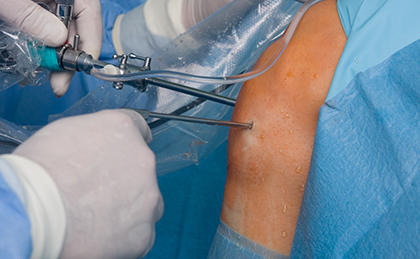
Sports injuries are inevitable when indulging in physically demanding or contact sports. Injuries are an inevitable part of playing any sport, be it tennis, squash, football, baseball, hockey, cycling, golf or any other. Physical injuries should not prevent you from playing sports because there almost always is a way to treat the injury . Some injuries can be diagnosed with x-rays, magnetic resonance imaging (MRI), or computed tomography (CT). Other injuries, however, require further diagnostic techniques. The orthopedic specialist uses arthroscopy for diagnosis and repair.
Frequently Asked Questions
Arthroscopy uses small incisions and a camera instead of one large cut, which usually means less pain and a shorter recovery.
Yes, arthroscopy is sometimes used purely to look inside the joint and confirm a diagnosis before deciding on treatment.
This depends on the injury treated, but many athletes return within a few months with proper rehabilitation.
Not always. Some arthroscopic procedures can be done under regional or local anaesthesia, depending on the joint involved.
Some patients need crutches for a short period, especially after more involved repairs, while others can walk soon after.
Small tears sometimes heal with rest and physiotherapy, while larger tears often need arthroscopic repair.
Recovery is gradual, with light activity often resuming within a few months and full sports participation taking six months or more.
Arthroscopy leaves only small scars from the incisions, which are usually much less noticeable than open surgery scars.
Yes, especially if rehabilitation is skipped or activity resumes too soon, so following recovery guidance matters.
Yes, age alone does not rule out arthroscopy, though overall joint health and activity goals are considered.